Affiliate Marketing
How to Start Affiliate Marketing Without a Website
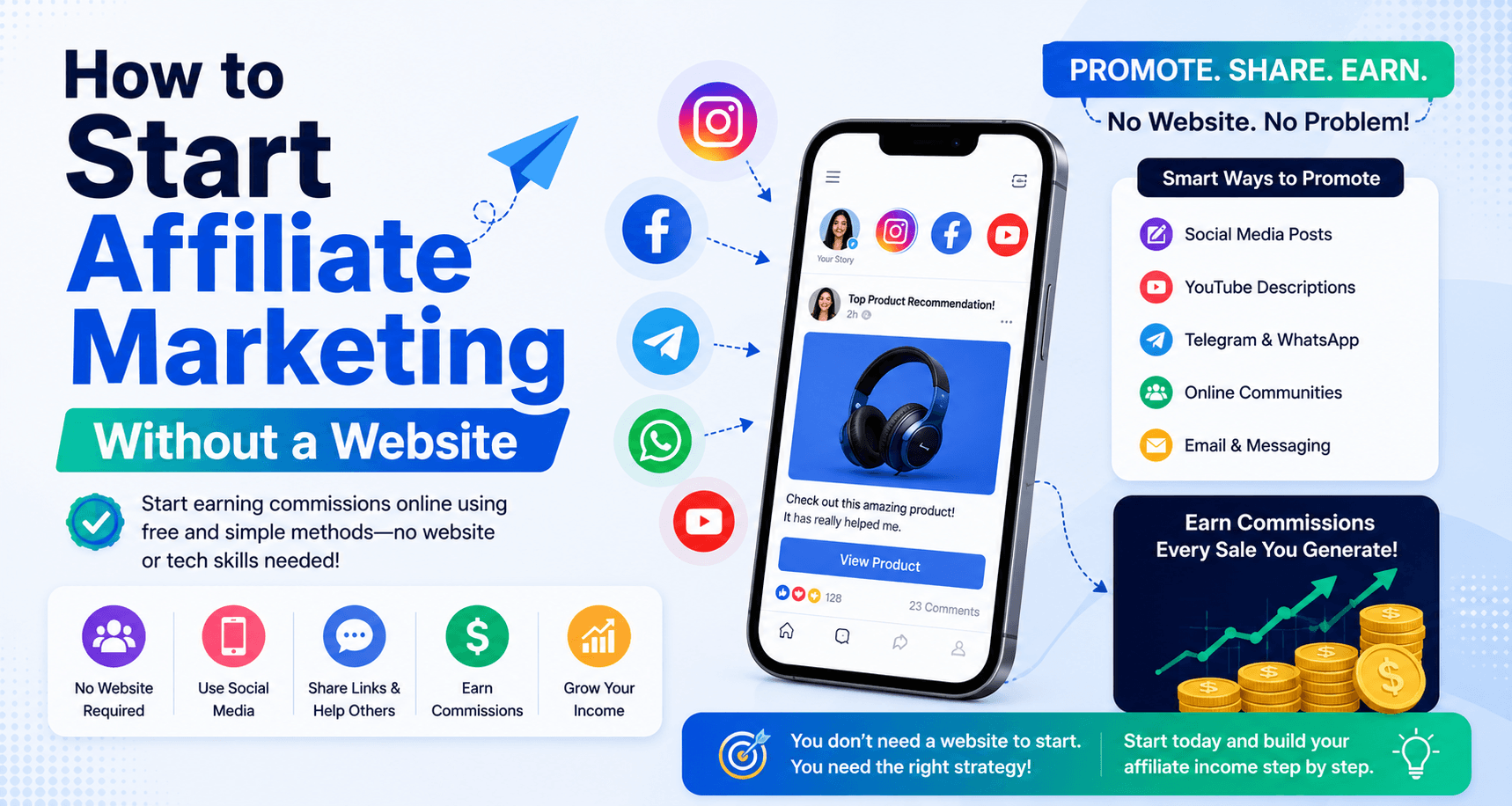
One of the biggest misconceptions about affiliate marketing is that you need a website to get started. While having a website can be beneficial, it's no longer a requirement in 2026.
Many successful affiliates generate leads, sales, and commissions using social media, YouTube, email marketing, and paid advertising without ever owning a website.
Can You Do Affiliate Marketing Without a Website?
Absolutely.
Modern affiliate networks provide tracking links, landing pages, and promotional materials that make it possible to promote offers without building a website.
You can generate income through:
- Social Media Marketing
- YouTube Channels
- Email Marketing
- Facebook Groups
- Telegram Communities
- Native Advertising
- Push Notifications
- Influencer Marketing
Why Beginners Choose Affiliate Marketing Without a Website
Lower Startup Costs
Creating and maintaining a website requires domain registration, hosting, design, and content creation. Without a website, you can start almost immediately.
Faster Setup
You can begin promoting offers within hours instead of spending weeks building a site.
Easier Learning Curve
Beginners can focus on traffic generation and campaign optimization rather than website development.
Step 1: Join a Trusted Affiliate Marketing Network
A good affiliate network provides:
- High-converting offers
- Reliable tracking
- Real-time reporting
- Fast payouts
- Dedicated affiliate managers
Popular categories include:
- Finance
- Credit Cards
- Personal Loans
- Sweepstakes
- E-commerce
- Mobile Apps
- Insurance
Step 2: Choose a Traffic Source
Social Media Marketing
- X (Twitter)
Share valuable content and recommendations related to your affiliate offers.
YouTube Marketing
- Product Reviews
- Tutorials
- Comparison Videos
- Case Studies
- Industry Tips
Include affiliate links inside video descriptions.
Telegram Marketing
Telegram channels and groups provide:
- Direct audience engagement
- High click-through rates
- Instant offer promotion
Facebook Groups
Build niche communities and focus on providing value rather than spamming links.
Step 3: Use Landing Pages
Even without a website, you can use:
- Network-hosted landing pages
- Prelanders
- Offer pages
- Lead capture pages
Landing pages improve conversion rates and user experience.
Step 4: Build an Email List
Email marketing remains one of the highest ROI channels.
- Direct audience access
- Repeat promotions
- Long-term asset building
Step 5: Leverage Short-Form Content
Short-form content dominates social media in 2026.
- Instagram Reels
- YouTube Shorts
- TikTok
- Facebook Reels
Step 6: Try Paid Advertising
Facebook Ads
- Lead Generation
- Sweepstakes
- Finance Offers
Native Advertising
Native ads provide high engagement and broad audience reach.
Push Notifications
Push traffic performs well for sweepstakes, mobile offers, and e-commerce campaigns.
Best Niches Without a Website
- Finance
- Sweepstakes
- Mobile Apps
- E-commerce
Common Mistakes to Avoid
- Spamming affiliate links.
- Choosing irrelevant offers.
- Ignoring analytics.
- Violating traffic rules.
Tips for Success
- Focus on one traffic source first.
- Build trust with your audience.
- Test different offers.
- Monitor campaign performance.
- Work closely with affiliate managers.
Affiliate marketing without a website offers lower costs, faster setup, easier scaling, and requires no technical skills, making it ideal for beginners.
Final Thoughts
Starting affiliate marketing without a website is easier than ever. Social media, YouTube, Telegram, email marketing, and paid advertising allow affiliates to generate substantial revenue without building a traditional website.
Start small, optimize your campaigns, and focus on delivering value to your audience. Over time, you'll build a sustainable and profitable affiliate marketing business.